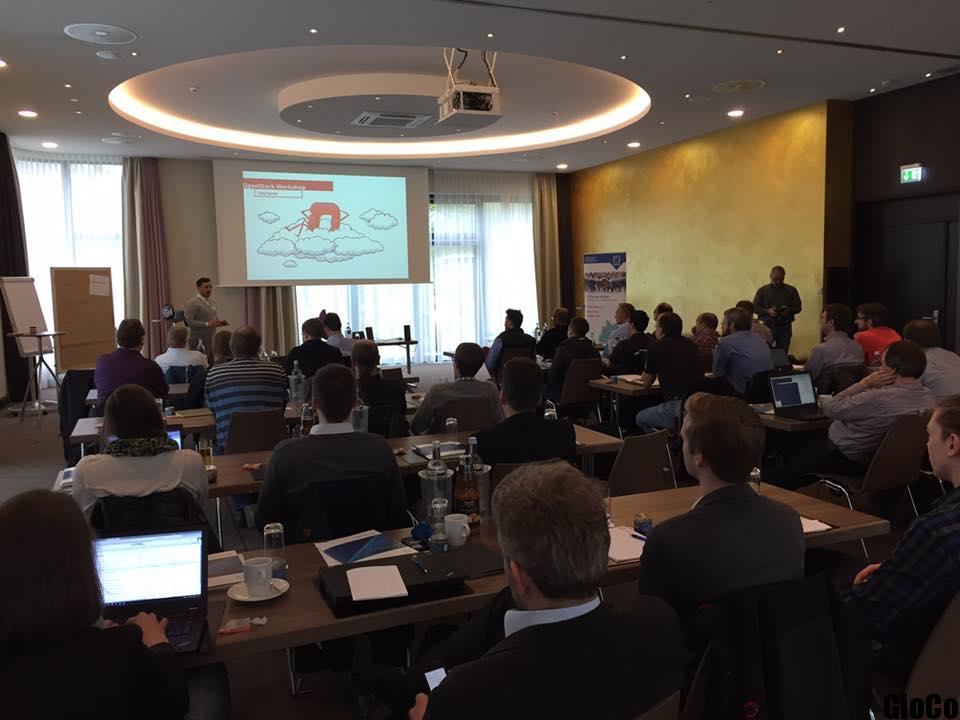
AI today is where the cloud was before OpenStack. Europe stands at a defining moment. Towards True Autonomy, a battle that cannot be won with the product, but with the ecosystem.
We started working on OpenStack in 2015. Since then, many things have changed, yet today we are faced with the same dilemma of needing an artificial intelligence stack. At the time, the main objective was to integrate and automate the various software programs in the new ecosystem, seeking to implement new technologies.

The current phase of Artificial Intelligence is surprisingly similar to when the OpenStack Foundation was born. Back then, the problem was not the absence of technology, but fragmentation: powerful but closed proprietary solutions, unable to scale as a shared industrial system. OpenStack did not win because it was “the best product,” but because it created a common platform on which speed, interoperability, and open governance became multipliers of adoption.
Today, AI is at the same turning point. Models, frameworks, and infrastructures are evolving rapidly, but the real bottleneck is not absolute performance: it is the speed of innovation that is sustainable over time. As in the cloud at that time, closed systems can advance rapidly in the short term, but they struggle to create de facto standards and support complex, multilateral ecosystems.
There are a lot of reasons why now, and in recent years, there have been a lot of new tools. This has created a new way for companies that use AI to build their tools.
Open source in AI is therefore not an ideological choice, but an acceleration strategy. It allows the software lifecycle to be separated from that of the hardware, attracts global contributions, and transforms competition into structured cooperation. This is exactly what OpenStack made possible for the cloud: not a single winner, but a common foundation on which many players could build value.
Equally critical is execution at scale, the role of open source
The goal of European policymakers must be clear: to equip the continent with advanced artificial intelligence and next-generation intelligence capabilities that match its strategic ambitions. Only then can today’s enormous flow of information become a decisive advantage that strengthens strategic judgment and aligns European sovereignty with the realities of the digital age. But with the intelligence and agility that Europe needs.
Digital sovereignty is not an abstract ideal; it is a matter of control. Without direct ownership of the entire technology stack, autonomy remains incomplete. From computing power and hardware to foundational language models, Europe must hold the keys to its own systems to ensure resilience, security, and independence.
The era of isolated prototypes must give way to robust, ready-to-use solutions. Cutting-edge technologies must be adopted, adapted, and finely calibrated to meet stringent operational and tactical requirements. Scalability and precision are no longer optional: they are the benchmarks of credibility.
True autonomy cannot come about through small incremental steps alone. It requires a clear vision, consistent investment, and the determination to build and govern Europe’s digital future in a comprehensive manner.