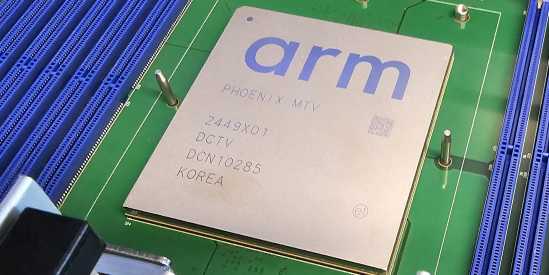
ARM announced a new CPU. One of those announcements that, if you work in this space, should immediately grab your attention: new architecture, new use cases, “agentic AI,” next-generation data centers.
And yet my first reaction was something like:
“Okay… interesting. But why does this feel familiar?”
Then I thought about it a bit more. And I realized it’s not that the CPU is new. It’s that the way I was looking at it is outdated
2011: when I thought choosing the “right thing” was enough
I’ve been working in and around this ecosystem since 2011. And like most people at the beginning, I was trying to find the “right” answer.
- ARM or x86
- CPU or GPU
- more cores or higher frequency
As if this were some kind of technical multiple-choice test with a correct solution at the end.
Spoiler: it isn’t.
And yes, I spent a lot of time thinking it was.
The thing I missed (for way too long)
There’s something about ARM that always fascinated me, but that I only really understood over time: the CPU itself was never the point.
The point is how it works with everything else.
When you start combining:
- ARM CPUs
- GPUs from NVIDIA or AMD
- specialized accelerators
- increasingly weird (and unpredictable) AI workloads
something changes.
At first, you think you’re building a system. Then you realize you’re trying to maintain a balance. And no, you rarely get it right on the first try.
The wrong question (that I also asked)
For years, the conversation looked like this:
- ARM vs x86
- CPU vs GPU
Clean, simple… and completely misleading. The real question the one I only started asking after making enough mistakes is:
how do you orchestrate all of this without it falling apart?
Because once workloads become dynamic, distributed, and AI-driven, you’re no longer just executing code. You’re managing behavior. And that gets complicated fast.
When I read about the ARM AGI CPU, I had a strange reaction.
Not excitement, Not skepticism.
More like:
“Okay, we’re finally saying this out loud. This CPU isn’t designed to be “the fastest.” It’s designed to sit in the middle of complexity and give it structure.
To coordinate. And if I’m honest… that’s exactly the problem I’ve been struggling with for years.
The part that made me pause
There’s another layer here that I found even more interesting.
The fact that Meta Platforms co-designed and is already adopting this CPU is not a small detail. It’s a signal.
And it connects to something we’ve been seeing for a while:
ARM isn’t becoming dominant just because of a better CPU.
It’s because of its growing control over the ecosystem.
We’ve already seen this with ARM cores powering platforms like NVIDIA’s Grace. And now with hyperscalers designing hardware tailored to their own workloads.
Meanwhile, players like Intel still see strong demand in the server space but often concentrated in areas like networking.
And here’s where it gets interesting. As agentic AI and orchestration-heavy workloads grow, the role of the CPU doesn’t shrink it expands. Which likely increases the total addressable market (TAM) for CPUs overall. Meaning: there’s room for more than one winner. Even for those who currently look behind.
What I’ve learned (slowly)
Looking back, the pattern is pretty clear:
- when I optimized individual components → average results
- when I started thinking in systems → things began to work
- when I ignored orchestration → problems, guaranteed
It wasn’t quick. And it definitely wasn’t elegant. But it was necessary.
The real shift (from the inside)
Today, the difference feels like this:
you’re no longer designing machines.
You’re designing interactions between components.
- the CPU coordinates
- the GPU accelerates
- specialized hardware handles specific tasks
- software desperately tries to keep everything together
And if one piece is off… you feel it immediately.
So yes… is it “just” a CPU?
Yes—and no. Technically, it is.
But to me, it represents something else:
the moment the industry (maybe) stops asking “what’s the best component?”
and starts asking “how do we make all of this actually work together without wasting half the energy?”
What happens next?
The interesting part isn’t the announcement itself.
It’s what comes after.
- new types of workloads
- differently designed data centers
- a stronger focus on real efficiency (not just theoretical performance)
- and, inevitably, more complexity to manage
So yes—it’s going to be interesting. In the most technical sense of the word.
I’ll keep doing what I’ve been doing for years: trying things, breaking things, fixing them, learning. Sometimes it works. Sometimes it doesn’t (often it doesn’t).
But that’s where you actually start to understand what’s going on.