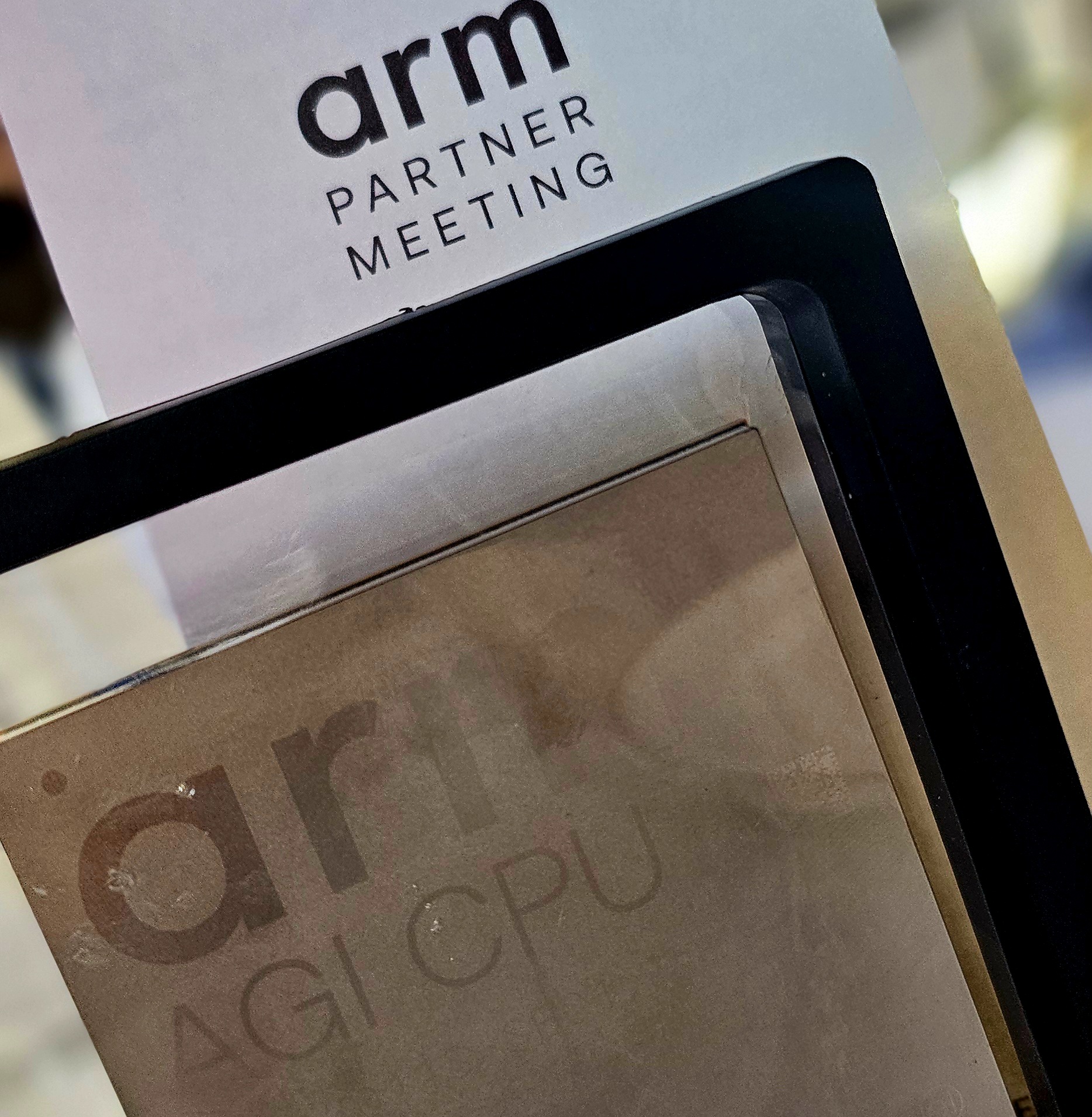
Arm Partner Meeting 2026: What I Took Away from Cambridge
The Arm Partner Meeting 2026 in Cambridge was a good opportunity to look beyond product announcements and focus on something just as important: how the Arm ecosystem is evolving around AI, cloud, software, and partnerships.
The agenda covered a lot of different topics over two days. These included agentic AI, cloud infrastructure, Arm AGI CPUs, how developers use them, robotics, digital twins and cloud-to-edge architectures.
What I noticed was that all these topics are becoming more and more connected.
Attending SiPearl_’s first live demonstration of the Rhea1 processor at the Cambridge

Partner Management Is More Than Managing Partners
Something that became clear during the event is that looking after partners at Arm means more than just keeping up business relationships.
Arm works with companies that sell semiconductors, companies that provide cloud services, original equipment manufacturers (OEMs), software companies, developers, and infrastructure partners. To get everyone moving in the same direction, you need to understand the technical side of things, develop the business and make sure everyone is working together.
The real goal is to turn technology into something that can be used by people.
This might mean working on developer enablement, technical validation, reference architectures, customer use cases, go-to-market activities, or simply making sure the right people are solving the same problem.
A Partner Manager often helps to connect different teams, including engineering, product teams, business stakeholders, and other relevant parties.
AI is not just about the model. It is becoming a problem with the infrastructure, software, and ecosystem.
Agentic AI was one of the strongest themes in Cambridge.
The discussion is moving beyond models and accelerators toward the full infrastructure stack. AI agents interact with data, APIs, applications, and other systems, so topics like orchestration, security, scalability, latency, and energy efficiency are becoming part of the AI strategy.
The key question is no longer only which model to use, but also where workloads should run and how the whole system should work around them.

Agentic AI Is Changing the Infrastructure Discussion.
Cloud and Edge Are Moving Closer Together
The line between cloud and edge is becoming less clear.
Some workloads belong in large cloud environments. Others need to run closer to users, machines, vehicles, sensors, or robots.
The right choice depends on latency, cost, sovereignty, connectivity, security, and performance.
The future is not cloud versus edge. It is cloud and edge working together.
Hardware Alone Is Not Enough
Arm-based infrastructure also depends heavily on software and developer experience.
Good hardware is only useful if applications are easy to port, test, optimise, monitor, and deploy.
For companies evaluating Arm, practical questions matter more than benchmarks alone:
– Are our applications compatible?
– Can developers test easily on Arm?
– Are our containers multi-architecture?
– Which workloads benefit most?
– How easy is the path to production?

My Main Takeaway
Partnerships Turn Technology into Execution
The discussions involving Arm showed how ecosystem development works in practice. Each company brings a different part of the stack. The real value comes from aligning technology, customer needs, and responsibilities around a concrete use case.
A partnership becomes meaningful when it leads to execution.
The most important thing I’ve learned is that AI infrastructure will be won at the ecosystem level.
Silicon, software, cloud platforms, developers, OEMs, and infrastructure providers must all work together as one system.
A strong roadmap is not enough. Execution, making sure the software is ready, how developers use it, and how partners work together are what make technology actually work.
ARM-based processors are not just for smartphones anymore. They are also used in the world’s largest cloud platforms. They offer better performance for the amount of electricity used, and are changing the way business computing works. The technology is ready to move forward. The important thing will be how well the ecosystem can adapt to this.